
Vanessa Sepul-Azcarraga’s realization that a space's culture requires intentional creation completely transformed her therapeutic approach.
At A Glance
-
Alum
-
Vanessa Sepul-Azcarraga
-
Undergraduate Program
-
BBA in Strategic Design & Management + Food Studies, Parsons The New School for Design (2018)
-
Program
-
MA in Counseling for Mental Health and Wellness (2020)
-
Professional Pathway
-
Founder of BraveHeartPsych, Private Practice
Trusting the Unknown
In one of Vanessa Sepul-Azcarraga’s internship classes, the professor began the semester with an unexpected exercise. Before discussing counseling techniques or diagnostic frameworks, the class paused to co-create “guidelines for the room.” Students talked about what safety, honesty, and accountability should look like in their shared space. They imagined difficult moments before they happened and discussed how they hoped to respond to them.
For Vanessa, the exercise revealed something fundamental about therapeutic work. The culture of a space does not appear on its own. Someone has to create it. That insight continues to shape her work today as the founder of BraveHeartPsych, a private psychotherapy practice in New York City focused on integrative mental health care.
Designing Wellness

Before arriving at NYU, Vanessa studied Strategic Design and Management at Parsons while also exploring food systems and wellness work. She became a founding member of GetWellBe, a health advocacy company focused on sharing recovery stories and interviewing integrative practitioners who address the root causes of health issues. In her last year at Parsons, she created Being You-Man, a program that used embodied learning to help people develop emotional intelligence.
Across these roles, a question kept returning: What information and support systems do people need to heal?
Identifying and Changing Patterns
The MA in Counseling in Applied Psychology at NYU gave her a new framework for exploring that question. One of the most formative experiences came during the program’s recorded mock counseling sessions. Watching herself on video, Vanessa began to notice small reactions she had not recognized in the moment. In subtle pauses and assumptions, she could see her own biases shaping the conversation.
The realization was uncomfortable. It was also transformative.
Learning to observe those patterns changed how she approached the therapeutic relationship. Instead of centering on intellectualization, she began focusing on present-moment awareness, paying closer attention to the dynamics that shape how people speak, listen, move, and reveal themselves.
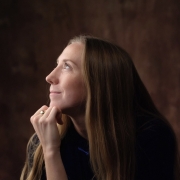
You can trust the unknown... The unknown may be even 'better' than your imagination or current dream.
More Alumni Stories

The Practice of Staying Present

Finding Purpose in the Work of Grief
