
A new review from NYU Steinhardt researchers challenges long-standing Western-centric assumptions about mathematics and argues for greater recognition of Indigenous mathematical systems as legitimate, sophisticated forms of knowledge in their own right.
The study, published in Educational Studies in Mathematics, was authored by Jessica Huancacuri and Gigliana Melzi, PhD.
The review emerged from both authors’ interests around whose knowledge and practices are recognized as legitimate within educational and developmental sciences. However, the focus on Indigenous communities is the work of Huancacuri, who is of Quechua heritage and has spent significant time reflecting on how Indigenous knowledge systems are often excluded from these fields.
Huancacuri emphasizes that this research is deeply connected to “reclaiming ways of knowing, doing, and being that have been historically marginalized.”
Drawing on sociocultural and decolonial frameworks, the authors examine how colonial histories have shaped what is recognized as “mathematics” in educational settings, and who is considered a legitimate knowledge holder.
For decades, mathematics education has often been framed as a universal set of skills primarily learned through formal schooling. This review complicates that framing by highlighting how mathematical reasoning is deeply embedded in the everyday practices of Indigenous families and communities.
The authors argue that dominant educational systems have historically marginalized non-Western epistemologies, limiting both how math is defined and how learning is understood. Their analysis emphasizes that these systems are not lacking in rigor; rather, they operate through different cultural logics and relationships to the natural world.
The review synthesizes 76 empirical studies published over the past two decades. Across this body of research, the authors identify a wide range of sophisticated Indigenous mathematical practices.
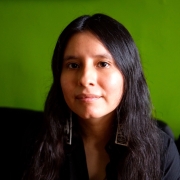
Mathematics is much broader than what many people might imagine. Across Indigenous communities worldwide, there exist sophisticated knowledge systems with their own histories, meanings, and purposes.”
Examples include relational forms of measurement used by the Yup’ik and complex geometric reasoning found in Mundurukú knowledge systems.
Despite this richness, the review identifies a major gap in the literature: approximately 78% of studies focus on preparing Indigenous children for success in Western schooling systems, rather than examining or valuing mathematical knowledge as it exists within Indigenous community life.
Researchers “were surprised by how little research explored Indigenous families’ own perspectives,” and “hope to see more genuinely collaborative and community-based approaches” in further research. This would look like asking children in marginalized communities different kinds of questions, such as how those communities learn math and what purposes they use it for.
The authors also highlight emerging efforts to address this imbalance, including programs such as IndigiLogix, a curriculum co-developed with Arapaho, Cheyenne, and Ute elders that centers Indigenous definitions of learning and success. Early findings suggest increased student engagement and improved academic outcomes when Indigenous knowledge systems are meaningfully integrated.
Looking ahead, the authors call for research and educational practices that move beyond simply “adding” Indigenous content into existing Western frameworks. Instead, they advocate for collaborative models in which Indigenous communities are co-designers of educational systems, with full recognition of their epistemic authority.
As for what readers should take away from this review, Huancacuri emphasizes, “The central message is that we need to move beyond recognizing Indigenous knowledge only when it supports Western educational goals.”
Read the full review in Educational Studies in Mathematics to learn more.
Related Programs


Applied Psychology
246 Greene Street , New York, NY 10003
P: 212-998-5555
E: applied.psychology@nyu.edu