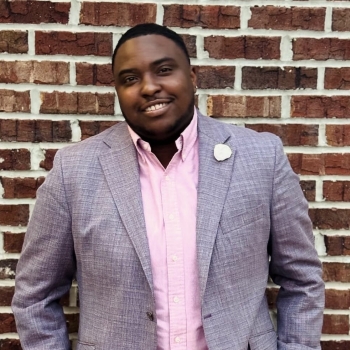
Gabriel Lockett

Gabriel Lockett

Assistant Professor

Applied Psychology

Gabriel Lockett, Ph.D. (he/him), is an Assistant Professor in the Department of Applied Psychology and Director of the Belonging, Advocacy, Liberation, and Love (BALL) Research Collective. His research, teaching, and mentorship are inspired by the communities he serves and reflect his lifelong commitment to access, equity, and belonging.


Dr. Lockett is deeply committed to cultivating affirming spaces that prioritize the wellness of Black-Afro-diasporic and LGBTQ+ communities. His research focuses on:

  • promoting health equity among BIPOC LGBTQ+ populations;
  • exploring strength-based approaches to coping with violence, discrimination, and oppression within Black LGBTQ communities; and
  • developing translational interventions for individual and collective wellness and liberation through community-based participatory research.

His work specializes in qualitative methodologies and is guided by strength-based, community-centered, social justice frameworks rooted in Black feminist praxis. To learn more about his work, visit the B.A.L.L. Research Collective website. 

Dr. Lockett’s contributions to the field have received both national and local recognition, and his peer-reviewed scholarship has been published in leading national and international journals. Prior to joining NYU, Dr. Lockett earned his PhD in counseling psychology from the University of Florida and completed an APA-accredited internship at Cambridge Health Alliance/Harvard Medical School. He also served as a lead researcher in the Collective Healing and Empowering Voices Through Research and Engagement (¡Chévere!) Lab at the University of Florida and partnered with the Wellness, Equity, Love, Liberation, and Survival (WELLS) Healing Center.

Selected Publications

Lockett, G. M., Abreu, R. L., Sostre, J. P., Klein, K., Aristilde, L., Trac, O., & Galupo, P. (in press).(Re)claiming gender euphoria: The wisdom authenticity vision empowerment (WAVE) model for gathering moments of gender euphoria among Black and Afro-Diasporic, transgender, nonbinary, gender diverse adults. Journal of Counseling Psychology.

*Special issue on centering justice & joy in healing praxis (Invited contribution).

Programs

Applied Psychology

The interdisciplinary Applied Psychology program develops students who can bridge psychological theory, research, and practice in a multicultural world.

Read More

Clinical/Counseling Psychology

Build on your knowledge of clinical and counseling psychology and prepare for a career as a psychologist in community agencies, clinics, hospitals, or private practice, as well as in academic and research settings.

Read More

Counseling for Mental Health and Wellness

A combination of graduate course work and clinical training will prepare you for a career as a professional clinical counselor.

Read More

Courses

Abnormal Psychology

Theories, conceptions, & descriptions of psychopathology with an emphasis on the interrelationship of diagnosis & treatment, theories of symptoms formation, & criteria of normality.

Course #

APSY-UE 1038

Credits

4

Department

Applied Psychology

Counseling Lesbian, Gay, Bisexual & Transgender Youth

Although support for rights and protections is at historic highs, a majority of LGBT and gender non-binary youth report experiencing bias, harassment, assault, and victimization based on their sexual or gender identities or their diverse gender expressions. This course explores ways mental health professionals counsel LGBT youth to enhance coping with psychosocial and minority stresses and in affirming their sexual and gender identities.

Course #

APSY-GE 2895

Credits

3

Department

Applied Psychology

Group Dynamics: Theory and Practice

The primary purposes of this course are to introduce students to the theory of group process & group dynamics underlying the practice of group counseling & the use of groups in a wide range of counselor interventions with children, adolescents & adults. Students will develop an understanding of group dynamics through readings, lectures, participation in & observing of ongoing groups. Attention will be given to personal, interpersonal, & group level dynamics as they occur in groups & to the interdependence of emotions, behavior & thought in group life.

Course #

APSY-GE 2620

Credits

3

Department

Applied Psychology