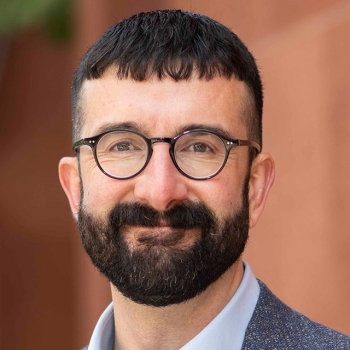
Headshot of Alex Chohlas-Wood

Alex Chohlas-Wood

Assistant Professor of Computational Social Science

About

Alex Chohlas-Wood is an Assistant Professor of Computational Social Science. He received his Ph.D. in computational social science from Stanford University, an M.S. in applied urban science and informatics from NYU CUSP, and a B.A. in studio art from Carleton College. 

His research investigates whether computational approaches can improve public policy. In recent work, he designed an algorithm that uses AI to help prosecutors avoid implicit bias in charging decisions, tested whether automated behavioral nudges reduce incarceration for public defender clients, and developed a utility-maximizing framework for equitable algorithms. He is particularly interested in prototyping and evaluating scientific and technical innovations in applied collaborations with government agencies. 

Dr. Chohlas-Wood leads the Algorithms, Data, and Public Policy Technology (ADAPPT) Lab at NYU. He is also the faculty co-director of the Computational Policy Lab, which he has led in various roles since 2018. Previously, he served as the director of analytics for the New York City Police Department. In 2025, he was elected as a member of the Council on Criminal Justice. His efforts have been supported by Arnold Ventures, the Heising-Simons Foundation, J-PAL North America, the MacArthur Foundation, the Microsoft Justice Reform Initiative, and Stanford Impact Labs. His research has directly informed state and local legislation and policymaking across the U.S. 

Programs

Applied Statistics and Computational Social Science

Implement and develop advanced computational and statistical methods to address critical policy issues across social, behavioral, and health sciences.

Read More

Courses

APSTA-GE 2017 Databases and Data Science Practicum 2 Credits

Databases and Data Science Practicum

This course provides a hands-on introduction to extracting, transforming, and visualizing data using real-world datasets. Students learn to query databases and join datasets using SQL, and learn to summarize, visualize, and map data in R using the tidyverse. Students also gain experience with git, enhancing their ability to work in modern collaborative environments. Alongside these modules, an ongoing emphasis of the course is to practice how to be a curious, skeptical, and articulate data scientist.

Course #

APSTA-GE 2017

Credits

2

Department

Applied Statistics, Social Science, and Humanities
APSTA-GE 2048 Generative AI for the Social Sciences 3 Credits

Generative AI for the Social Sciences

This course provides a hands-on introduction to using generative AI in social science research. Students use AI to classify text corpora, parse unstructured documents, analyze images, and create synthetic data and simulations. The course also reviews ethical questions that arise with the use of AI in social science research. Assignments focus on using AI to answer social and policy questions with real-world datasets.

Course #

APSTA-GE 2048

Credits

3

Department

Applied Statistics, Social Science, and Humanities