
A Conversation with Assistant Professor of Applied Psychology Gabriel Lockett
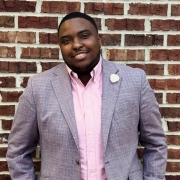
In this Q&A, Dr. Gabriel Lockett, Assistant Professor of Applied Psychology and recipient of both the 2026 Jeffrey S. Tanaka Memorial Dissertation Award and the 2026 Gender Liberation Award, discusses research centering Black and Afro-Diasporic transgender, nonbinary, and gender-diverse (TNGD) adults.

B.A.L.L. Research Collective at Harlem Pride
Your dissertation, Exploring Experiences of Gender Euphoria among Black and Afro-Diasporic Transgender, Nonbinary, and Gender-Diverse Adults, received the 2026 Jeffrey S. Tanaka Memorial Dissertation Award. What does this recognition mean to you?
This award was incredibly meaningful to me. The award was presented by the APA Committee on Ethnic Minority Affairs, and the dissertation award recognized work from across psychology nationally. To have this work recognized at a time when Black and gender-diverse communities continue to face significant marginalization and laws that question people’s humanity, dignity, and existence was incredibly meaningful and, honestly, difficult to put into words.
There were a lot of feelings that came with the recognition, but gratitude stands out most. I felt grateful to the people who trusted me with their stories, to the communities that continue to create knowledge and possibility in the face of adversity, and to the mentors, colleagues, students, and loved ones who supported me.
I also feel a deep sense of admiration for the courage of the communities this work centered. There was so much brilliance, creativity, resistance, and care within the community, and it was an honor to contribute to scholarship that recognized that.
For readers who may not be familiar with the concept, what is gender euphoria, and why is it important to study alongside experiences of gender dysphoria or discrimination?
The simplest way I described gender euphoria (also known as gender joy, trans joy, gender affirmed) is the feeling of being deeply connected to yourself and your gender. Anyone could experience something like this. It can be as simple as getting a haircut that made you look in the mirror and think, “Yes, this feels like me,” or expressing yourself in a way that feels authentic and affirming.
For gender expansive people, gender euphoria can involve embodiment, authenticity, connection, and joy. It is especially important to study because so much of the conversation about transgender and gender-diverse people focuses on harm and violence. Those experiences are important, and they are not the entirety of people’s lives.
It is also important to note that gender euphoria and gender dysphoria are not opposites where one has to cancel out the other. People can experience both. Studying gender euphoria allows us to ask different questions about what allows people to thrive. For me, there was something powerful about centering trans joy at a time when so many gender-expansive people are being told they should not exist.
What led you to focus specifically on the experiences of Black and Afro-Diasporic TNGD adults in your dissertation?
One of my main reasons for focusing on Black and Afro-Diasporic TNGD adults was to center a population that has often been underrepresented in research, despite the incredible cultural richness and historical significance of these communities.
There is so much to honor and understand when we look at the experiences of Black and Afro-Diasporic gender-diverse people. If we want to develop culturally responsive research, interventions, and forms of care, we have to center the communities that had historically been left out of those conversations.
For me, it was beyond identifying a gap in the literature. It was wondering what becomes possible when we take the knowledge, experiences, and wisdom of the communities seriously.
At the Society for Qualitative Inquiry in Psychology (SQIP), you presented research on joy and resistance among Black and Afro-Diasporic Transgender, Nonbinary, and Gender-Diverse (TNGD) people. What are some of the key ideas or findings from this work that you hope people understand?
One of the main takeaways I presented was that joy is a necessary act of resistance against the realities of oppression and that, for Black and Afro-Diasporic transgender, nonbinary, and gender-diverse people, joy can exist despite and throughout navigating racism, transphobia, marginalization, and structural violence.
In this work, I was interested in understanding the multidimensionality of joy beyond an emotion or moment of happiness. We explored how joy can be connected to authenticity, embodiment, connection, resistance, and healing. We also talked about the importance of expanding on factors that facilitate communities feeling fully alive, connected to themselves, and connected to others.
At APA, you chaired a symposium focused on systems that harm TNGD BIPOC communities and pathways toward healing. What questions or themes did the symposium explore?
The symposium brought together several studies examining the lived experiences of BIPOC transgender, nonbinary, and gender-diverse (TNGD) communities and the ways structural and social conditions shaped well-being. Across the presentations, we explored structural violence, hostile sociopolitical climates, suicidality, and religious and spiritual contexts, while also looking at pathways toward healing, resistance, and wellness.
The presentations included research on religion and spirituality among BIPOC TNGD individuals, the impact of Florida’s hostile sociopolitical climate on BIPOC TGD well-being, and suicidal thoughts and behaviors among TNGD BIPOC people. Together, the studies highlighted both the systems that created harm and the ways people and communities navigated those systems.
Each presentation had a unique perspective and focus on how BIPOC TNGD communities were coping with harm. It was also inspiring to receive many questions from the audience and genuine engagement with the work.
You also received the 2026 Gender Liberation Award. How does this recognition connect to your broader research, advocacy, and professional work?
The Gender Liberation Award was a joint honor from the APA Section for the Advancement of Sexual Orientation and Gender Diversity and the Section for the Advancement of Feminist Psychology. The award recognizes individuals who contributed to gender liberation through advocacy, professional service, clinical practice, mentorship, and/or research.
For me, what made this recognition especially meaningful was that it reflects the interconnectedness of the work that I have been doing. I see my research, service, advocacy, and community engagement as interconnected and informing one another.
My research is a way to ask important questions and gain understanding about wellness, joy, belonging, healing, and liberation. My community work encourages me to consider the impact and ask how we can put some of that knowledge into practice, while my advocacy focuses on creating spaces where others could develop their own ideas and possibilities.
To me, gender liberation is connected to collective liberation. It is about disrupting conditions where people are constantly limited, policed, and constrained; and imagining conditions where people can live, move through the world, and imagine more free futures.
I believe researchers have a unique responsibility. We ask people to share their experiences and knowledge with us; we can also be a pathway for that knowledge to return to communities in tangible and meaningful ways.
What is the BALL Research Collective and what did it mean to bring that work into a community setting at Harlem Pride?
The Belonging, Advocacy, Liberation, Love (BALL) Research Collective broadly centers on the well-being of BIPOC LGBTQ+ communities, with a particular focus on Black and gender-diverse communities. We center well-being across individual, collective, and systemic levels. Our work is rooted in community-participatory research, qualitative methods, and Black feminist praxis.
Being able to table at Harlem Pride felt really aligned with our core values. We shared Pride gear and resources, talked with people about the history, culture, and significance of Harlem Pride, and discussed the importance of creating and sustaining spaces that center Black and Brown LGBTQ+ communities. It was also just joyful! We made connections, learned from people, and felt proud alongside the community.
You delivered a keynote address at the Society for the Psychological Study of Social Issues (SPSSI) preconference. What did you hope graduate students and early-career professionals would take away from your address?
I spoke about what it meant to hold onto hope and cultivate possibilities for futures that are sustainable and holistically well. The graduate students and early-career professionals I spoke with were particularly interested in what it meant to hold hope during a time when so many people and communities were facing uncertainty and significant challenges.
I encouraged people to reflect on their own reservoirs of hope. We reflected on where their hope comes from (whether ancestral, spiritual, cultural, relational, or something else) and how they could carry that hope with them through difficult circumstances. I also reminded people that they already have strengths within them, and talked about how we can become so focused on the next milestone that we forget what we've already survived, learned, and cultivated.
My hope was that people left feeling grounded in the realities of the present while still having a sense of possibility for the future. The talk drew on scholarship on radical hope and the psychology of radical healing, particularly ideas about how we could imagine and work toward possibilities even when those possibilities are difficult to think about. I also asked folk to remember to "Keep your hope on you" and made a reflection PDF worksheet that I hope to distribute widely soon.
You also presented at the Association of Black Psychologists on navigating anti-Blackness in professional spaces. What inspired this work, and what conversations do you hope it generates?
I did this work in collaboration with my colleague, Dr. Pearis Jean. She developed the SNAPS model as part of her dissertation at the University of Florida and has continued building on those findings. It had been an honor to work with her and the broader team over the years.
One unique aspect of this work was that many of us had been students navigating significant marginalization a, and we had since graduated and moved into different professional spaces. At the conference, we also heard from people at various different stages of their careers. Those conversations reinforced how important it was to create spaces where people navigating anti-Black racism could feel validated, learn strategies from one another, and think collectively about holding institutions accountable.
I hope for more conversations that recognize and validate (often people who navigate anti-Blackness are dismissed or not believed) how anti-Black racism exists and impacts people and communities. I also hope we as people feel empowered to have more conversations about how anti-Black racism is reinforced within institutions, how people are disproportionately impacted (depending on their positions and circumstances), and what it would take to create meaningful, sustainable change so that people do not have to continue experiencing harm.
Jean, P. L., Mosley, D. V., Bridges, B., Lockett, G., Badio, K., Kennerly, S., & Dada, O. (2026). The strategically navigating anti-Black racism in professional spaces (SNAPS) decision-making model for Black graduate students and early career professionals. Journal of Counseling Psychology, 73(3), 398–418. https://doi.org/10.1037/cou0000826
How do you see your research and community engagement informing one another?
I see them as deeply connected. My community engagement informs the questions I ask as a researcher, and my research gives me additional tools to understand and respond to what communities are experiencing.
I believe researchers have a unique responsibility. We ask people to share their experiences and knowledge with us, we can also be a pathway for that knowledge to return to communities in tangible and meaningful ways. This is what I hope to build toward through the BALL Research Collective. I wanted research to happen alongside community and to create opportunities for scholarship to support community education, advocacy, care, and connection.
Looking ahead, what questions or areas of research are you most excited to explore next?
I want to continue moving beyond deficit-based understandings of marginalized communities. I am excited to continue exploring the different domains of wellness and what it means to build lives and communities where people can survive and thrive.
Learn more about Dr. Gabriel Lockett's research lab, the B.A.L.L. Research Collective.

Applied Psychology
246 Greene Street , New York, NY 10003
P: 212-998-5555
E: applied.psychology@nyu.edu